
Book Review: Daikon
By Samuel Hawley, ISBN-13: 978-1668083055, Avid Reader Press / Simon & Schuster, July 8, 2025, 352 pgs.

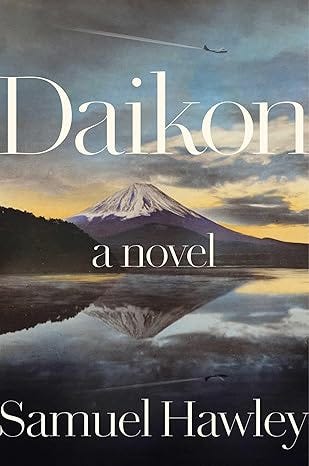
I was attracted to Daikon on the library shelf because I am familiar with the large, bulbous white radish used in Asian cooking, having kicked around the Far East for four years, off and on during the 1980s and 90s while in the Air Force. I usually reject, out of hand, any book that hints at “alternative history,” however with a premise so intriguing but subtle and the celebrity author blurbs on the back cover, I gave this World War II historical novel a go.
Staring in the opening chapter, the very first B-29 mission to drop an atomic bomb on Japan, target Kokura-which was the primary real-world target of the second atomic attack that dropped a bomb on Nagasaki, crash lands in Japan. The crew is all killed, the plane in pieces, but the “Little Boy” uranium bomb is intact.
The closest military base to the crash site is an Imperial Japanese Navy (IJN) airfield, and a group of IJN aviation technicians, let by a young ordnance officer, are sent to the site. The bomb, now referred to as the “daikon” due to its shape, is brought back to the base and the team starts to disassemble it. Suspecting some strange metallic components might be uranium, the ordnance officer uses basic high school chem lab methods to confirm his suspicions, Geiger counters not yet an everyday item in 1945 Japan.
Suspicions confirmed, the information is sent to naval headquarters and ultimately the War Department. The information comes across the desk of a Japanese Army colonel intel type, who happens to be a member of a fanatical “death before dishonor” group of Army officers ready to see Japan burn entirely to ashes before surrender. His already high motivation is further fueled by a raging methamphetamine addiction. He enlists a civilian scientist of the now defunct Japanese atomic weapon effort, whose American-born “Nisei” wife is interred in a brutal Kempeitai (think Japanese Gestapo) prison, to figure out a way to use the bomb against the inevitable Allied invasion of the Japanese home islands. Here is a hint: the mission parameters do not necessarily require the attackers to be able to safely return from their atomic mission.
Once the initial “alternative history” premise is established, the novel incorporates a tremendous amount of valid factual military, aeronautical, scientific, and historical detail, including late-war Japanese weapons that have been little discussed outside the realms of academic historians and WWII nerdville. The author, who was born in South Korea of Canadian missionary parents, does a terrific job of portraying the Japanese characters in a realistic depth, avoiding all of the easy clichés and stereotypes. Even the fanatical intel colonel’s character is deep, with a swirling insight into his meth-filled fever dream to achieve victory despite all odds.
If you have an interest in military-related historical fiction, World War II, Japan/Asia, or the Atomic Age, Daikon is definitely worth a read. Banzai!